Quarantine Cargo Nets: How to Avoid a Road Debris Accident

Quarantine Cargo Nets: How to Avoid a Road Debris Accident

Road debris comes in many shapes and forms. We’ve all seen everything from luggage to kitchen appliances abandoned at the sides of highways, and it’s common to wonder about the story behind them. How, exactly, did they end up there?

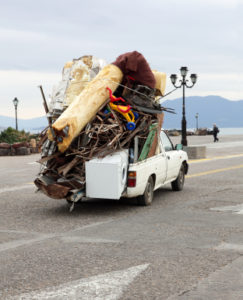
By far the most usual culprits for road debris are personal or commercial cargo-hauling vehicles such as light-duty trucks. Unsecured items in truck beds are easily flung free by even a very minor bump in the road. There are severe penalties and fines legislated throughout North America for those who fail to secure their cargo properly, and they are levied upon everyone from the occasional camper whose cooler they forgot about is bounced onto the highway to the professional oil field worker who shows up at the job site to realize that half of their cargo is missing. Unfortunately, it is usually the person driving behind them that pays the highest price.

Prevent accidents before they happen with Quarantine Restraints. By far the most versatile, easy to use and comprehensive cargo net system available, Quarantine Restraints has created cargo netting that is so simple yet multi-functional you will look forward to when you get to use it. The only engineer-certified cargo nets on the market, Quarantine boasts the highest strength rating in the industry. Compare us to the others here!

How to Avoid a Road Debris Accident

You’re driving along and suddenly an item is ejected from the truck bed of the vehicle in front of you. What do you do?

Road debris-related accidents have a tendency be very serious. Alert drivers react quickly, but unfortunately a fast response isn’t always the most ideal. Even if you are travelling at a rather low speed, a hasty swerve is likely to cause your vehicle to spin out or even roll. Then the other vehicles on the road become obstacles, too, and the opportunity for a multi-car collision increases rapidly.

Tips For Keeping You and Your Fellow Drivers Safe

If you are behind a vehicle with an unsecured load, keep your distance and stay aware. When you are able, attempt to change lanes and pass or fall back to a safe distance.

Always watch at least 12 seconds ahead down the road and ensure you have an escape route ready. You should always be able to safely pull over to a shoulder, median, or other lane except for when passing another vehicle.

Be able to make a decision and stick with it. Sometimes, if the item is smaller and lighter, it is better to just go ahead and hit it rather than try to evade it.

Avoid distractions when driving on highways or routes where road debris is likely, such as major trans-national freeways.

Never allow someone to stay in your blind spot. Either speed up or slow down so that you each have enough room to maneuver.

If you encounter road debris that should be removed, take the time to report it to the authorities in charge of the roadway. That way they can see that it is safely removed. As well, many states and provinces post road signs indicating the correct number to call if you spot a vehicle with an unsecured load. If you have not seen a sign, however, you may also call the local authorities in such a case.

Remember to pull over when you make your call. It is illegal in many places across North America to use cellular telephones while driving.

Don’t Lose Your Load

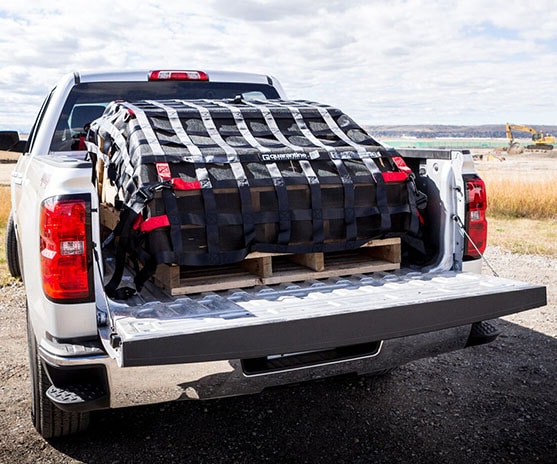
Keep the people immediately behind you and those down the road safe from unsecured cargo and always properly restrain your load. Quarantine’s cargo net system connects to truck beds bed using four detachable and adjustable straps with extra-wide, super-sturdy carabiners on each end for quick connections. The straps use Flow-Strap (FS) extender hardware that was designed and created exclusively by Quarantine. They adjust to 50 inches for extra-high loads and their detachable nature allows for a wide range of tie-down applications. You can even store your net in your storage case and just use the FS tie-downs for awkward items such as a lawnmower, motorcycle or ATV. Add our Accessory Pack for two more straps, two more carabiners and two more S-Hooks for larger and heavier loads and to provide replacement parts for your restraints.

Looking for cargo nets for your business fleet? Find a Quarantine dealer near you!

Source URL : https://quarantinerestraints.com/quarantine-cargo-nets-how-to-avoid-a-road-debris-accident/
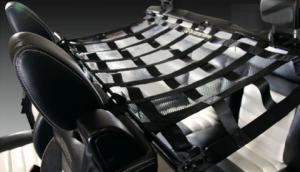
Safety Tips For The Inside Of Your Vehicle: Cargo Nets By Quarantine

Safety Tips For The Inside Of Your Vehicle: Cargo Nets By Quarantine

While driver reaction is critical to prevent an accident, abrupt braking and lane changes to avoid a collision can often cause unsecured items inside a vehicle to shift position. At high speeds, unsecured items can become dangerous projectiles. That’s the main reason behind the design and development of Quarantine Restraints’ interior cargo nets, and the reason their use is becoming more and more common for workplace safety plans.

Equipment and any loose items should be secured inside your vehicle whenever possible to prevent forward thrust under heavy braking, sudden lane changes, or in the event of an accident. At Quarantine Restraints job site safety is our top priority, and our interior cargo nets are designed to easily install into any truck or SUV to keep your workers safe.

What Happens to Cargo Inside a Vehicle During an Accident?

When an accident occurs the vehicle stops, but everything inside (including the cargo, driver and passengers) continues to move at the same rate of speed the vehicle was travelling before the collision.

Just as airbags and seat belts prevent the continued movement of drivers and passengers, interior cargo nets prevent expensive equipment and other loose items inside your vehicle from becoming projectiles in the event of an accident, and prevent worker injuries and damage to expensive equipment.

The Importance of Securing Interior Cargo

Interior cargo securement isn’t just for industry and workplace safety!

According to the American Automobile Association (AAA), when a vehicle comes to a sudden stop from 60 mph, a 25-pound object can pack 1,625 pounds of force if it impacts an occupant. Even lightweight electronic devices such as phones, GPS units, iPads, and laptops can cause serious injury and damage, as can books, coolers, recreational and sporting equipment, and even pets.

Keep the Interior of Your Vehicles Tidy and Your Cargo Secured

A can of soda can become lodged under the accelerator when rolling around loose on your vehicle’s floor, leading to brake system malfunctioning and a very dangerous situation. And, when a vehicle suddenly decelerates, the force of gravity gives loose objects up to 20 times the amount of force they would normally carry.

According to the National Roads and Motorists’ Association, sudden braking while traveling at 50 km/h can cause groceries from the backseat to impact occupants in the front seat with the same amount of force that they gain falling from the second floor of a building. A one litre bottle of water carries an impact of 20 kg of force, and even small grocery items such as bottled water can become dangerous in an accident.

Safety Tips for the Inside of Your Vehicle: Cargo Nets

Many drivers are unaware that unsecured items in a vehicle’s interior can become dangerous projectiles in an accident. To avoid dangerous distractions and situations, please keep the interior of your vehicles clean and free of unsecured items.

While you may not be able to prevent injury and damage completely if you’re involved in a crash, the following tips will help prevent loose items in your vehicle from becoming dangerous projectiles:

  • Always secure cargo and loose items behind the seat, in the trunk, or cargo area of your vehicle
  • If your vehicle has a cargo area instead of separate trunk space, utilize cargo nets with anchor-points and tie-downs
  • Leave objects you won’t need at home (for example, leave children’s car seats at home if they won’t be travelling with you)
  • Position larger and heavier items of cargo as low as possible, against secured/fixed components of your vehicle, and centered to prevent forward thrust and momentum from building if you are involved in a collision
  • Utilize glove compartments and consoles to store loose items such as smartphones and other electronic devices

Always use your seat belts. Unsecured people can be just as dangerous as unsecured cargo!

Quarantine Restraints Interior Cargo Nets

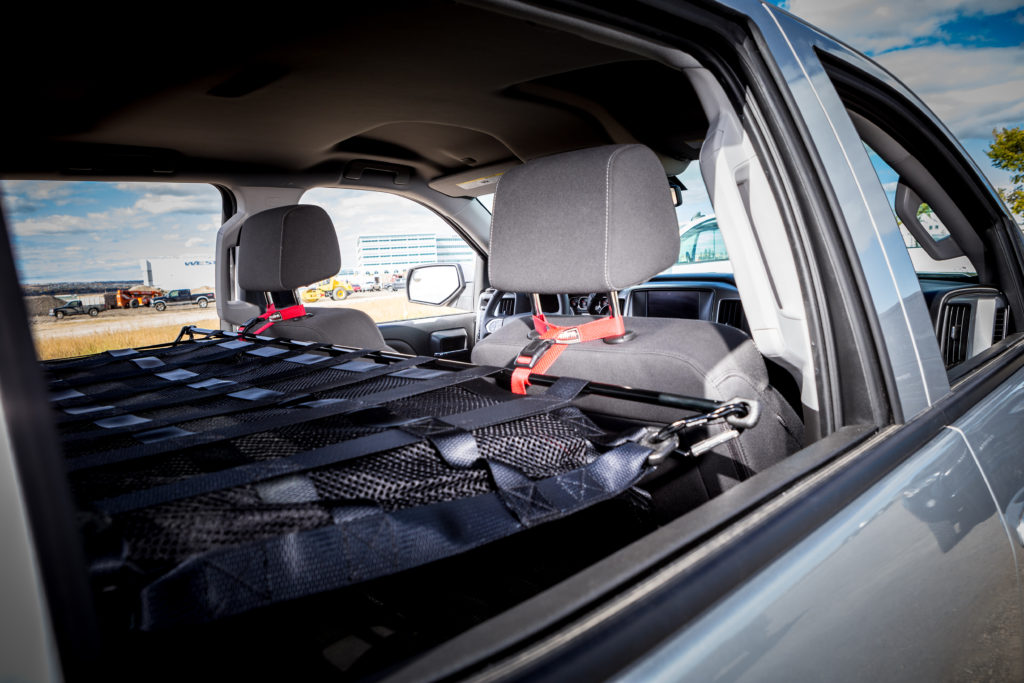
Quarantine Restraints cargo nets are complete cargo securement systems that were specially designed for easy installation to prevent worker injury and damage to expensive equipment. We recommend that everyone include interior cargo nets in their jobsite safety plans.

With quality design features and made from the highest materials, Quarantine Restraints interior cargo nets keep your workers safe and prevent expensive business losses. Refer to our Frequently Asked Questions for more answers about our products.

Our convenient dealer locator will help youfind a Quarantine Restraints dealer nearest you.

Source URL : https://quarantinerestraints.com/safety-tips-for-the-inside-of-your-vehicle-cargo-nets-by-quarantine/

What Are Interior Cargo Nets? | Quarantine Restraints

What Are Interior Cargo Nets? | Quarantine Restraints

Quarantine recommends that all job sites include interior cargo nets in their site safety plans. Anyone who has ever been in an accident knows that items inside vehicles and machinery that are not secured have the potential to become deadly projectiles when they gain momentum. Injuries from interior cargo striking individuals are common, and are being recognized as a dangerous and potentially fatal type of workplace accident.  Interior cargo securement is now being included in numerous workplace safety plans.

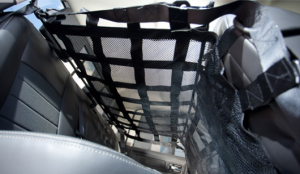
We developed our Interior Restraint System  by working with leading Health, Safety & Environment directors from several industries to provide outstanding performance plus be easy to use. Our “Universal Attachment” concept is true to its name. Our cargo nets fit all vehicles, and were developed to not only secure backseat cargo to prevent against breakage during transportation, but also to provide protection to occupants inside vehicles from loose or dislodged cargo in the event of an accident. Our optional Front Extension Barprovides an interior divider that allows you to extend your net to form a safe cavity over the backseat area. This set-up forms a “roof” over the entire backseat allow for easy access while also ensuring occupants’ safety.

Facts and Figures on Unrestrained Interior Cargo Accidents

At Quarantine, job site safety is our priority. Our interior cargo nets are designed to prevent accidents before they happen, and to keep your workers secure.

Injuries involving unrestrained interior cargo often go unreported, so it’s difficult to tell just how many people are affected each year. Numbers indicate, though, that they are an everyday occurrence.

The BC Forest Safety Council (BCFSC)  found that an unbuckled adult weighing 150 lbs. involved in a 50-km/h head-on accident with a stationary object would strike with the force of a 3.5-ton truck.

U.S. Safety Research  specialists have determined that at an impact of 55 mph a 20 lb. object hits with a force of 1,000 lbs.

ABC News  reported on a case where a one-year-old child was struck with a cellphone while involved in a head-on collision. The cellphone hit hard enough to crack the child’s skull. The same article also references a study published in the Journal of the American Medical Association that points out that passengers in vehicles are also in danger from other passengers who are not wearing their seatbelt. The study indicates that all passengers in a vehicle have a 25 per cent chance of incurring a fatal injury during a crash if just one of them is not properly restrained.

In 2009, the CBC reported on a woman driving in B.C. who was killed when her laptop (which was placed on the backseat) became a projectile during an accident.

Strategic Safety Consulting, a company that studies vehicle safety, has found that unrestrained items in cars account for more than 13,000 injuries in the U.S. each year.

Most Common Items to be Unrestrained in a Vehicle

  • Cell phones
  • GPS systems
  • Ipads or tablets
  • Laptops
  • Heavy books
  • Car seats
  • Business supplies
  • Coolers
  • Recreational and sports equipment
  • Pets
  • Cargo racks
  • Storage bins

Health and Safety in the Workplace

Industries are becoming more and more stringent about health and safety regulations. Due to a fatality in their industry caused by loose cargo, the BC Forest Safety Council (BCFSC)  implemented the Occupational Health & Safety Regulation (16.35) for Mobile Equipment in 2010, which states, “The operator must maintain the cab, floor and deck of mobile equipment free of material, tools or other objects which could create a tripping hazard, interfere with the operation of controls, or be a hazard to the operator or other occupants in the event of an accident.”

Current Alberta Transportation standards have adopted Canada’s National Safety Code (NSC) Standard 10 (Cargo Securement)  as the standard for securing cargo in Alberta. Criteria prohibit the use of unmarked tie-downs, and apply to cargo both in and on vehicles. All of Quarantine’s cargo restraints are clearly marked and are also compliant with Department of Transportation (DOT) and North American Cargo Securement Standards (NACSS).

At Quarantine we’ve made it our mission to bring interior cargo securement to the forefront of people’s minds when thinking about workplace and personal safety. We endeavour to maintain the highest standards at all times and continue to be a leader in our field. Learn more about Quarantinetoday!

Source URL : https://quarantinerestraints.com/what-are-interior-cargo-nets-quarantine-restraints/

Distracted Driving Laws In the U.S. and Canada From Quarantine Cargo Nets

Distracted Driving Laws In the U.S. and Canada From Quarantine Cargo Nets

At Quarantine Restraints, road safety is one of the core values of our company, evidenced by the high-quality cargo restraint systems we design and manufacture. Ensuring our cargo nets meet or exceed industry safety standards is our top priority! Our interior and exterior cargo nets are incredibly tough, versatile, and have the highest strength rating available.

Distracted driving with that in mind,we decided it might be time to remind cargo-carriers about the dangers of distracted driving to yourself, your business and the general public at large. Distracted driving laws were designed to keep you and others on the roadway alert and aware and to reduce the number of distracted truck driver accidents in Oklahoma City. Pay attention to the most common distractions to drivers and the various laws for specific states and provinces of the U.S. and Canada while on the road to avoid both accidents and fines.

If you’ve been involved in an accident that involves a distracted driver, then it might be worthwhile getting yourself a lawyer so that you can pursue a lawsuit to help get you any compensation that you might deserve. If this is something that interests you then you might want to check out a lawyer like this Personal Injury attorney in Athens AL to help you with your case.

Who is Considered a Distracted Driver?

Any distraction endangers drivers, passengers, bystanders and anyone else on the road. A distracted driver is a driver involved in any activity that diverts their attention away from their primary task: Driving.

Typical distractions causing millions of injuries and fatalities in North America annually:

  • Texting or talking on cellphones and smartphones
  • Personal grooming
  • Eating food and drinking beverages
  • Conversing with passengers
  • Reading (including maps, written directions, and navigation systems)
  • Adjusting radios, CD players and MP3 players
  • Watching videos

Quick Facts on Distracted Driving

Merely rummaging around for your phone and glancing at it to determine the importance of answering is a major distraction. And sending or receiving a text takes your eyes off the road for an average of 4.6 seconds. At 90 km/h (55 mph), that’s the equivalent of driving the length of an entire football field while blind! This shows why new cars that are designed to keep distractions to a minimum are so valuable. Delivery drivers can really benefit from having a new van with innovative technology built in to ensure they can focus on their job and keep their eyes on the road. A van leasing specialist might be able to assist anyone in finding a car with these specifications.

At any moment of any given day in the U.S., nearly 660,000 drivers are using their cellphones or adjusting an electronic device while driving. Since 2010, this number has remained largely unchanged.

According to studies completed in the U.S:

  • 25 per cent of teenagers admit to responding to at least one text message each time they drive
  • 10 per cent of parents admit they engage in multiple text messages or text conversations while driving

According to the Canadian Automobile Association:

  • 80 per cent of collisions and 65 per cent of near-misses have some type of driver distraction involved as a contributing factor

Overview of Distracted Driving Laws in Canada

All ten Canadian provinces have passed some type of cell phone/distracted driving legislation.

For example, in the provinces of British Columbia and Saskatchewan, GDL drivers are prohibited by law from the use of any kind of hand-held communication device as well as any type of hands-free device. In addition to banning hand-held devices for any type of communication, the provinces of British Columbia and Ontario also prohibit drivers from using any hand-held electronic entertainment device while driving.

Here you’ll find Distracted Driving Laws by Province.

Overview of Distracted Driving Laws in the U.S.

While Congress is considering legislation for the prevention of distracted driving, the behavior of passenger car drivers currently falls only under the jurisdiction of individual states, and there are no federal laws prohibiting it. Most states have made efforts to address the issue by passing tough laws against texting, talking cell phones without a hands-free device and other distractions.

For example, in the state of New York, any hand-held cellphone use is banned for all drivers. In Michigan, no citizen is permitted to text while driving. Bus drivers and new drivers are banned from both hand-held and hands-free devices. California bans all texting and hand-held devices while driving.

Here you’ll find Distracted Driving Laws by State.

The Creators of Quarantine Restraints Cargo Nets Urge You to Avoid Distracted Driving!

Distracted driving is a contributing factor in approximately four million accidents involving motor vehicles in the U.S. and Canada annually. The safety of our roadways is of utmost importance to our company, and we urge everyone to avoid distracted driving.

While Quarantine Restraints cargo nets can protect your cargo, they can’t protect you from distracted driving, and we urge you to protect yourself, your business, and others. Quarantine Restraints Cargo Nets are creating new safety standards for the industry. Our Interior and Exterior restraints are actually far more than cargo nets; they’re complete cargo securement systems designed for both commercial and recreational purposes. Please see our About Us page and use our convenient Dealer Locator to find the Quarantine Restraints dealer nearest you!

Source URL : https://quarantinerestraints.com/distracted-driving-laws-in-the-u-s-and-canada-from-quarantine-cargo-nets/